Monday, November 20, 2006

Hidden Links: 'Casino Royale' and 'Hard Candy'

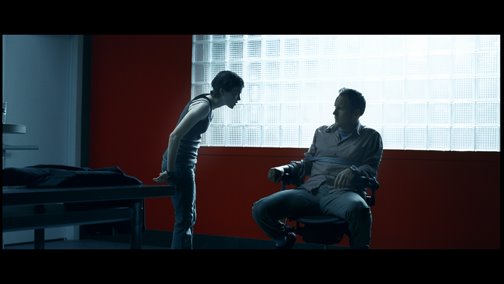

I had the doubtful privilege of seeing two scenes of genital mutilation last week. The first was in the despicable 'Hard Candy', a deeply unpleasant film about a teenage girl who turns the tables on an Internet stalker and subjects him (or maybe not) to the unkindest cut of all. The three people behind this effort explained in the illuminating DVD extra 'Controversial Confection' that the plot is simply a gimmick to reel viewers in but then tried to suggest that it was supposed to question the audience's sense of right and wrong. Well, no it didn't, it just left me feeling profoundly depressed, especially given the fact that the director seemed to be labouring under the delusion that the female character he had created was in some way realistic. I think it is fair to surmise that most fourteen year olds don't speak like a hipster refugee from a Tarantino film while undertaking a DIY castration. I hope not anyway. Naturally, I have the burden of answering why I watched the damn thing in the first place, a task that is presently beyond my capabilities.
I would give less of a bollocking to the Bond movie, even though it was half an hour too long and felt slightly like a computer game tie-in. Ever since 'Our Friends in the North', I have thought highly of Daniel Craig and he is certainly an improvement on the oily Pierce Brosnan, who could surely never borne with such stoicism the punishment bestowed on the new Bond's knackers.
However, there does seem to be more and more films (not just horror) featuring torture scenes. These two, Syriana, The Wind that Shakes the Barley are some that spring to mind. I wonder is this a reflection of current events or a way to normalise the idea of torture in popular culture.

Labels: ,

Tuesday, November 07, 2006

Hidden Links: Borat and Michel Houellebecq


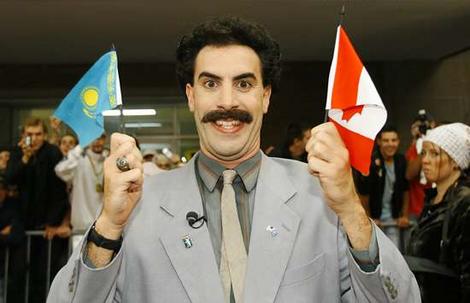
I saw Sacha Baron Cohen's Borat in a nearly full Savoy cinema on Sunday night and laughed at most of it, particularly his insane dancing and the naked wrestling. Afterwards I was trying to come up with some interesting 'take' on it in case I met anyone who wanted to talk about whether or not it was offensive. I couldn't but inspiration struck today while reading a review by James Wood, who in passing I see is married to Claire Messud, author of modish 'The Emperor's Children', of 'The Possibility of Island' by Michel Houellebecq . No need to rehearse Houllebecq's literary output here except to say that critics regarded his previous book, 'Platform', as prophetic given that it was published days before September 11 and imagined Islamic fundamentalists bombing a resort for Western sex tourists in Thailand. In 'The Possibility of an Island', which was released almost a year ago in Europe, Daniel, its protagonist, is an outrageous professional comedian, who likes to splatter his venom all over delicate topics like the Middle East: one of his best-known films is a parody of a porn film, and is called Munch on My Gaza Strip (My Huge Jewish Settler). Now, who has just released a wildly successful film which revels in saying the unsayable and ridiculing subjects that hitherto were taboo? So the 'take' is to draw attention to the similarities between the Daniel character in Houllebecq's novel and Sacha Baron Cohen and to muse on the French writer's prescience. Will that do?

Labels: , , ,

Monday, October 09, 2006

Hidden Links: Agamben and Pasolini


A surprising discovery last night while watching The Gospel according to St. Matthew:
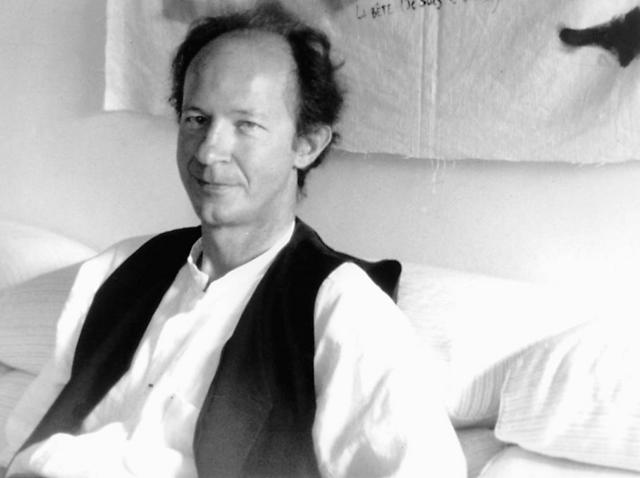
Italian philosopher Giorgio Agamben plays Phillip, one of the amateur actors that director Pier Paolo Pasolini selected ahead of professionals for what is a harsh and admittedly hard going adaptation of Matthew's gospel.
Agamben is currently something of an academic star because of his belief, as outlined by Daniel Binswanger in Sign and Sight, that "the modern state is nothing other than a totalitarian organisation for the efficient administration of bare biological life." His refusal to be fingerprinted at JFK airport in New York and his subsequent ejection from the country have added further to his fame.
Daniel Morris, writing in Bookforum, believes that Agamben's participation in the film was critical to his development as a philosopher and political theorist - he published his first article the year the film was made(1964) and enjoyed something of intellectual flowering subsequent to it, the highlight being a two year stint with Heidegger in France between 66 and 68.
Not content with identifying oppressive character of the modern state, Agamben also has ideas about the gestural nature of cinema.

Labels: , , , ,

Irish Blogs Blogarama - The Blog Directory